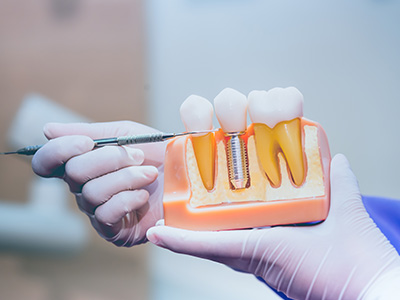
A single tooth implant replaces a missing tooth with a three-part solution: a titanium implant that is placed in the jaw, an abutment that connects the implant to the visible restoration, and a crown that matches the shape and color of your natural teeth. Because the implant is anchored directly into bone, it restores chewing function and speaking ability in a way that closely resembles a natural tooth. Many patients find the result feels more like their original tooth than other replacement options.
This treatment is designed to be both functional and aesthetic. Modern implant crowns are crafted to blend with your surrounding teeth, filling the missing space without altering the appearance of adjacent teeth. The implant also provides stability during everyday activities—biting an apple, laughing, or speaking—so you can rely on predictable performance in daily life. The end result is a durable, discreet solution that supports a confident, natural-looking smile.
Because the implant replaces the tooth root rather than just the visible portion, it helps preserve the underlying jaw structure. Replacing that root function is an important difference between implants and removable restorations, because retaining bone volume supports facial contours and long-term oral health. For many people, a single tooth implant is the most conservative way to restore a single missing tooth while protecting the surrounding anatomy.
When a tooth is lost, the bone that once supported it begins to remodel and can gradually resorb. A dental implant stimulates the jaw in a similar way to a natural root, helping to slow or prevent bone loss in the immediate area. This preservation of bone supports adjacent teeth and helps maintain the contours of the gum and jaw over time, reducing the risk of shifting or settling in the dental arch.
Unlike a conventional three-unit bridge, an implant does not require the unnecessary alteration of adjacent healthy teeth. Bridges rely on crowns attached to neighboring teeth for support, which means those teeth must be prepared and reduced. An implant-supported crown stands on its own, preserving enamel and the long-term strength of neighboring teeth. This tooth-specific approach helps maintain more of your natural dental structure for the future.
Preserving bone and protecting adjacent teeth also contributes to easier hygiene and long-term stability. Without the need to modify neighboring teeth, flossing and routine cleaning tend to be more straightforward, and the restored tooth remains accessible for maintenance. These factors together make single tooth implants a practical option for patients who want to retain as much of their natural dentition as possible while addressing a gap.
Treatment begins with a focused evaluation that includes a clinical exam and imaging to assess bone quality and the position of surrounding structures. This planning step helps determine whether a straightforward implant placement is possible or if preparatory procedures—such as bone grafting—are advised to create a stable foundation. Advanced imaging tools allow the dental team to visualize anatomy precisely and plan the optimal implant location.
Implant placement is typically performed under local anesthesia, and many patients report minimal discomfort during the procedure. After the implant is placed, a healing period follows during which the implant integrates with the jawbone, a process called osseointegration. Once integration is established, an abutment is attached and a custom crown is fabricated to match your bite, shade, and tooth contours. The final restoration is designed to be comfortable, functional, and indistinguishable from adjacent teeth.
Follow-up appointments during and after treatment ensure that healing progresses as expected and that the crown is properly adjusted. The timeline varies by patient—factors such as bone quality and any additional procedures affect how long integration takes—but careful planning and patient cooperation help achieve the best possible outcome. Your clinician will explain each phase and any special care instructions to support successful healing.
Single tooth implants rely on proven biomaterials and modern laboratory techniques to deliver predictable results. Titanium implants are widely used because of their strength and compatibility with bone. Crowns can be made from high-strength ceramics that mimic the translucency and color of natural enamel while offering excellent wear resistance. These material choices support a restoration that looks natural and functions reliably over time.
Contemporary treatment also benefits from digital tools that improve accuracy and patient comfort. Cone-beam CT scans and digital impressions enable three-dimensional planning and a precise fit for the final restoration. In some cases, guided surgery techniques can be used to place the implant in a preplanned position, reducing chair time and enhancing accuracy. These technologies allow the clinician to deliver a tailored outcome optimized for each patient’s anatomy and aesthetic goals.
The careful coordination between the clinical team and the dental laboratory ensures that the final crown aligns with occlusion and neighboring teeth. Attention to detail in shade matching, contouring, and bite adjustment helps the restoration function naturally and remain comfortable long term. This combination of high-quality materials and modern technology contributes to outcomes patients can rely on.
Once a single tooth implant is restored, ongoing care is straightforward but essential. Daily brushing, flossing, and use of interdental cleaners help keep the area clean and prevent the buildup of plaque and bacteria at the gumline. Maintaining good oral hygiene supports the health of the surrounding gum tissue and the longevity of the implant-supported crown. Routine professional checkups and cleanings allow your dental team to monitor the implant and identify any early changes.
Regular dental evaluations also include checking the integrity of the crown, the health of the surrounding gum tissue, and the stability of the implant. Early detection of gum inflammation or other concerns makes it easier to address issues before they progress. With consistent home care and professional maintenance, many patients enjoy predictable long-term function from a single tooth implant.
Lifestyle factors that support overall oral health—such as avoiding tobacco and managing conditions that affect healing—also influence implant success. Your care team will provide personalized guidance on habits and routines that help protect your investment in oral health. Proper maintenance helps ensure that your restored tooth continues to contribute to a healthy, functional smile for years to come.
In summary, a single tooth implant offers a conservative, reliable way to replace one missing tooth while preserving surrounding teeth and supporting jawbone health. With thoughtful planning, modern materials, and personalized care from the team at Studio Dental Center for Advanced Dentistry, patients can achieve a restoration that looks natural and restores confident function. If you would like to learn more about whether a single tooth implant is the right option for you, please contact us for more information.


A single tooth implant replaces a missing tooth with three coordinated components: a titanium implant that functions as an artificial root, an abutment that connects the implant to the visible restoration, and a custom crown that matches the shape and color of surrounding teeth. Because the implant is anchored directly into jawbone, it restores chewing and speaking function in a way that closely resembles a natural tooth. This approach preserves normal oral mechanics and provides a stable, long-term replacement for one lost tooth.
Unlike removable options, a single tooth implant supports the jaw in the same way a natural root does, which helps maintain facial contours and prevent localized bone loss. Modern implant crowns are crafted from high-strength ceramics to mimic enamel translucency and color, so the restoration blends discreetly with adjacent teeth. For many patients a single tooth implant offers both a functional and aesthetic solution that feels natural in daily life.
A single tooth implant replaces the root and the crown of the missing tooth, while a traditional bridge replaces only the visible portion and relies on adjacent teeth for support. Because implants are anchored in bone, they help preserve jaw structure and avoid the reduction of healthy neighboring teeth that is often required for a bridge. Removable dentures restore multiple teeth but do not prevent the bone remodeling that follows tooth loss and often lack the stability of an implant-supported tooth.
The implant-supported crown stands independently, which simplifies oral hygiene and reduces the risk of decay or compromise to adjacent teeth. Implants also tend to provide more predictable chewing efficiency and comfort compared with removable prostheses. Choosing the appropriate option depends on each patient’s anatomy, the condition of neighboring teeth, and long-term oral health goals.
Candidacy for a single tooth implant depends on several factors including sufficient bone volume at the site, healthy gum tissue, and overall medical conditions that influence healing. Good oral hygiene and a commitment to maintenance are important for long-term success, and habits such as tobacco use can affect candidacy and outcomes. Many systemic conditions are manageable with proper coordination of care, so a thorough medical and dental history is part of the evaluation.
A focused evaluation with clinical examination and three-dimensional imaging helps determine whether direct implant placement is feasible or whether preparatory procedures like bone grafting are needed. If implants are not the ideal choice, your clinician will discuss alternative restorative options tailored to your situation. The goal is to select a treatment that balances function, aesthetics, and long-term oral health.
Treatment begins with a comprehensive consultation that includes a clinical exam and CBCT imaging to evaluate bone quality and anatomical structures and to plan the optimal implant position. At Studio Dental Center for Advanced Dentistry the planned procedure is performed under local anesthesia, and many patients receive a temporary restoration while the implant integrates with bone in a process called osseointegration. This healing phase typically lasts several weeks to a few months depending on bone quality and any adjunctive procedures.
Once osseointegration is confirmed, an abutment is attached and a custom crown is fabricated to match bite, shade, and contour. Follow-up visits are scheduled to adjust occlusion and ensure soft-tissue health around the restoration. Your clinician will outline the expected timeline for your individual case and explain any steps that may affect scheduling.
Bone grafting is recommended when there is insufficient natural bone to support a stable implant or when the ridge has resorbed following tooth loss. Grafting materials can include the patient’s own bone, donor bone, or synthetic substitutes, and the choice depends on the clinical situation and the volume of augmentation required. In some cases a guided bone regeneration technique or sinus lift in the upper jaw is used to create an adequate foundation for the implant.
When a graft is performed, an additional healing period is usually required before placing the implant to allow the graft to integrate and mature. Your clinician will explain the reasons for any preparatory procedures and provide an anticipated schedule for staged or simultaneous implant placement. Careful planning and modern grafting techniques make predictable outcomes achievable for many patients who initially lack sufficient bone.
Implant fixtures are commonly made from titanium because of its proven strength and ability to integrate with bone, while abutments and crowns are often made from high-strength ceramics such as porcelain-fused-to-ceramic or zirconia to achieve a natural appearance and durable function. These material choices support long-term wear resistance and mimic the optical properties of natural enamel. Laboratory fabrication and digital shade matching help ensure the final restoration harmonizes with surrounding teeth.
Contemporary implant dentistry uses digital tools such as cone-beam CT scans and intraoral scanning to plan implant position accurately and to fabricate restorations with precise fit. Guided surgery techniques and computer-assisted planning can reduce chair time and increase placement accuracy in complex cases. This combination of reliable biomaterials and advanced technology improves predictability and patient comfort throughout treatment.
Daily oral hygiene is essential for implant health; brushing twice a day with a nonabrasive toothpaste and cleaning around the implant with floss or interdental brushes helps prevent plaque accumulation at the gumline. Using antimicrobial rinses as recommended and avoiding hard or excessively sticky foods during early healing supports soft-tissue recovery. Good home care reduces the risk of inflammation and peri-implant disease.
Routine professional checkups and cleanings allow your dental team to monitor the implant, assess the crown, and detect any early signs of tissue changes. If you notice persistent swelling, bleeding, increased mobility, or discomfort around the implanted tooth, contact your clinician promptly for evaluation. Timely maintenance and prompt attention to changes help preserve implant function for the long term.
As with any surgical procedure, single tooth implant placement carries potential risks including infection, failure of osseointegration, nerve irritation, or sinus complications in the upper jaw. Careful preoperative assessment, sterile technique, and appropriate imaging reduce the likelihood of these events, and many complications can be successfully treated when identified early. Patient factors such as smoking and uncontrolled systemic conditions can increase the risk and are addressed during treatment planning.
If complications occur, management may include local debridement, antibiotics, adjustment or removal of components, or additional surgical interventions depending on the issue. Your clinician will explain warning signs to watch for and the steps taken to resolve problems while prioritizing preservation of surrounding structures. A clear follow-up plan and prompt communication with the dental team help ensure any concerns are managed effectively.
Single tooth implants have a high long-term success rate when placed and maintained properly, with many studies showing predictable function for decades under ideal conditions. Longevity depends on factors such as bone quality, oral hygiene, regular professional care, and avoidance of harmful habits like tobacco use. While the implant fixture often lasts many years, individual outcomes vary and ongoing monitoring is important.
Crowns placed on implants may require repair or replacement over time due to wear, chipping, or changes in the bite, but these interventions do not necessarily reflect implant failure. Routine evaluations allow your dental team to address restorative needs early and to extend the service life of the entire restoration. Consistent home care and adherence to recall visits are key to maximizing longevity.
During a consultation, ask about the clinician’s experience with single tooth implants, the diagnostic tools used for planning, and the expected sequence of care for your specific anatomy. Inquire about any preparatory procedures that may be necessary, how healing will be monitored, and what to expect in terms of temporary restorations and follow-up visits. Clear information about postoperative care and signs that warrant prompt attention will help you feel prepared for each phase of treatment.
Ask how the proposed restoration will be matched to your adjacent teeth and what materials are recommended for your crown. If you prefer, mention any cosmetic priorities or functional concerns so the team can tailor the plan to your goals. At Studio Dental Center for Advanced Dentistry the care team can walk through imaging results and treatment options to help you make an informed decision tailored to your needs.

Ready to book your next dental visit or have questions about your care?
At Studio Dental Center for Advanced Dentistry, our team is here to make getting started simple and stress-free. Whether you call, email, or submit our online form, we’re happy to help with scheduling, treatment questions, or anything you need along the way. We take the time to listen and guide you through your options so you feel confident and informed at every step. Take the first step toward a healthier, more confident smile, reach out today and experience personalized care made easy.