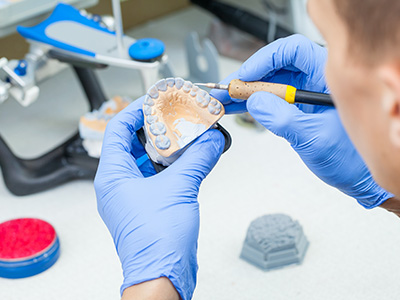
Primeprint is a high-resolution 3D printing system designed specifically for dental applications, and it plays a central role in modern digital workflows. The process begins with an intraoral scan that captures the exact contours of a patient’s teeth and soft tissues. That digital model becomes the blueprint for everything from surgical guides to appliance prototypes, allowing clinicians to plan treatment with a level of detail that was once difficult to achieve outside of a lab setting.
By integrating Primeprint into the office workflow, clinicians can move seamlessly from diagnosis and planning to fabrication without multiple handoffs. Digital design files are refined in dental-specific software, then sent directly to the printer for fabrication. This continuity reduces the risk of data loss or interpretive error while keeping the clinician in control of design decisions and final verification.
For patients, the practical benefit of this workflow is predictability. Plans based on precise scans translate into physical devices that consistently match the intended geometry. That reduces surprises during try-ins and helps clinicians present clearer expectations to patients during consultations. At Studio Dental Center for Advanced Dentistry, we use this approach to provide transparent, data-driven care that prioritizes accuracy and patient comfort.
One of the defining strengths of Primeprint is its high dimensional accuracy. When an appliance is printed directly from a validated digital model, fit and occlusion are more predictable than with many traditional fabrication methods. That precision matters for clinical outcomes: well-fitting surgical guides improve implant placement accuracy, orthodontic models enhance treatment planning, and snug night guards provide more consistent protection for bruxism patients.
Precision also reduces chairside adjustments. Devices that require minimal trimming and fewer refits save time during appointments and limit repeated visits for small corrections. Clinicians can focus on treatment rather than remediation, which often improves both the efficiency of care and patient satisfaction with the experience.
Moreover, predictable fit supports long-term function. Appliances that align correctly with dental anatomy exert the intended forces and distribute loads predictably, which contributes to treatment stability over time. For patients, that means devices that perform reliably from day one rather than requiring frequent tweaks or replacements.
Primeprint enables a level of customization that goes beyond “one-size-fits-most.” Design software allows clinicians to fine-tune thickness, margins, retentive features, and other aspects of an appliance to match a patient’s anatomy and treatment goals. Whether the case calls for a softer material in areas of soft tissue contact or reinforced sections where strength is critical, in-office printing makes those adjustments straightforward.
Customization also extends to aesthetics and comfort. For cosmetic or provisional appliances, clinicians can adjust contours and surface finishes to improve appearance and feel. For functional devices like occlusal guards or splints, custom contours improve retention and reduce irritation. This attention to personalized detail supports better compliance and overall satisfaction among patients.
By keeping these customization steps in-house, the clinical team remains closely involved in every decision that affects the final device. That continuity of care fosters a relationship-based approach where the patient’s feedback can be incorporated quickly into revisions, improving outcomes without lengthy back-and-forth with external vendors.
Producing appliances on-site with Primeprint shortens the timeline between diagnosis and delivery. Where traditional lab workflows can introduce multi-day or multi-week delays, in-office printing often lets clinicians deliver appliances in a matter of hours to days depending on case complexity. This speed is especially valuable for time-sensitive procedures such as surgical guide fabrication for implant surgery or rapid delivery of protective devices after acute dental injury.
Faster turnaround benefits both patients and the practice. Patients experience fewer appointments and quicker progress toward treatment goals, which reduces disruption to daily life. For the dental team, streamlined production means greater control over scheduling and fewer dependencies on external suppliers, enabling more predictable case management and efficient use of clinical time.
Importantly, speed with Primeprint does not mean sacrificing quality. Modern dental printers balance resolution and material properties so that printed devices meet clinical performance standards while still being produced rapidly. That combination of reliability and efficiency helps practices deliver a higher level of care without compromising outcomes.
Quality control is a critical component of any in-office fabrication process. Primeprint systems are designed to work with validated dental materials and follow manufacturer-recommended post-processing protocols, including cleaning, curing, and finishing steps that ensure material biocompatibility and mechanical integrity. Adhering to these protocols is essential for producing safe, long-lasting devices for patient use.
At the practice level, rigorous documentation and standardized workflows reduce variability between cases. Scans, design files, print parameters, and post-processing records create an auditable trail that supports consistent results and helps the clinical team identify opportunities for refinement. That operational discipline is a hallmark of practices that prioritize patient safety and predictable outcomes.
Finally, because Primeprint is intended for dental applications, many of the resins and materials available are formulated to meet dental regulatory and biocompatibility standards. When combined with appropriate clinician oversight, this creates a production environment that balances innovation with the safeguards necessary for routine patient care.
Primeprint represents a practical synthesis of digital planning, precise fabrication, and patient-focused customization. For patients, that translates into appliances and guides that fit better, function as intended, and arrive more quickly than many traditional alternatives. The technology supports clearer treatment planning conversations, fewer appointment surprises, and outcomes that reflect careful, data-driven design.
For clinicians, in-office 3D printing offers greater control, faster case turnover, and the ability to iterate designs in close collaboration with patients. Those advantages help practices deliver modern, efficient care without sacrificing the personal attention that patients value in a dental relationship.
At Studio Dental Center for Advanced Dentistry in Plantation, FL, we integrate Primeprint technology into a broader commitment to precision, comfort, and long-term oral health. If you’d like to learn more about how digitally printed appliances could fit into your treatment plan, please contact us for more information.


Primeprint is a high-resolution dental 3D printing system that converts validated digital designs into accurate physical appliances. It receives files from intraoral scanners and dental CAD software and produces detailed models, surgical guides, splints, and provisional restorations. The digital-to-physical continuity reduces manual steps and helps clinicians maintain control over design and verification.
In a modern in-office workflow, scans captured with an intraoral scanner become the blueprint for fabrication, letting teams move quickly from diagnosis and planning to production. Post-processing and clinical verification remain critical parts of the workflow to ensure final fit and function. At Studio Dental Center for Advanced Dentistry in Plantation, FL, Primeprint is used to streamline cases and improve predictability for patients.
Primeprint can produce a wide range of dental devices used across restorative, surgical, and appliance-based treatments. Common outputs include surgical guides for implant placement, diagnostic and working models, occlusal guards, provisional crowns and bridges, and customized trays. The system also supports prototype and appliance iterations during treatment planning.
Orthodontic models and aligner forms, night guards, and unique appliance components such as retainers or occlusal splints are routinely fabricated with compatible resins. For many indications, printed parts serve as final-use devices when printed and post-processed according to manufacturer and regulatory guidelines. Clinicians select device types based on clinical need and material properties.
Primeprint’s high dimensional accuracy improves the fit and occlusion of printed appliances compared with many traditional analog workflows. Because devices are produced directly from validated digital models, margin definition and contact relationships are preserved throughout the process. That predictability reduces adjustments during try-in and supports better immediate clinical results.
Accurate fit also contributes to long-term function by ensuring forces are distributed as intended, which is important for splints, surgical guides, and provisional restorations. When less chairside trimming is required, appointments are shorter and clinicians can focus on treatment rather than repeated corrections. Overall, improved fit enhances efficiency and patient comfort.
Customization is a key advantage of in-office 3D printing with Primeprint. Dental design software enables clinicians to tailor thickness, margins, retention features, and anatomical contours to a patient’s unique oral anatomy and therapeutic goals. Material selection and localized reinforcement can be planned digitally to balance comfort and strength where needed.
Keeping design and fabrication in-house allows rapid iteration based on patient feedback during the appointment or shortly after delivery. Adjustments can be made to the digital file and reprinted without the delays associated with external labs. That responsiveness supports better compliance and higher satisfaction with the final device.
In-office Primeprint production shortens the interval between scan and delivery compared with traditional shipping-dependent workflows. Depending on case complexity, many appliances and models can be printed and post-processed within hours to a few days, enabling faster clinical progression. Faster turnaround is particularly helpful for time-sensitive needs such as surgical guide fabrication or emergency protective devices.
Because the practice controls scheduling and print queues, clinicians can coordinate design and production to minimize patient appointments and downtime. However, appropriate post-processing steps such as cleaning and final curing remain essential and affect total turnaround time. Clear communication with patients about realistic timing helps set expectations while taking advantage of faster in-office production.
Quality control is integral to safe in-office printing and includes validated print parameters, material traceability, and documented post-processing protocols. Common post-processing steps are washing to remove residual resin, controlled curing to achieve mechanical properties, and careful finishing to smooth margins and occlusal contacts. Maintaining logs of scan files, print settings, and material lots creates an auditable trail for consistent outcomes.
Clinician oversight at verification stages ensures that printed components meet clinical requirements before delivery. Regular maintenance and calibration of the printer and adherence to manufacturer guidance reduce the risk of variability between prints. These practices together support the production of clinically reliable devices that meet biocompatibility and performance expectations.
Primeprint is compatible with a range of resins formulated specifically for dental applications, including materials designed for intraoral use, surgical guides, and long-term provisional restorations. Many of these materials are developed to meet dental biocompatibility standards and to provide the necessary mechanical characteristics for their intended indication. Material selection should match the clinical purpose, balancing flexibility, strength, and surface finish.
Proper handling, post-processing, and clinician evaluation are essential to realize the biocompatibility and performance that manufacturers claim. Resin manufacturers and regulatory bodies publish guidance on indications and usage that clinicians should follow. When combined with validated workflows, suitable materials make printed devices safe and appropriate for patient care.
Integrating Primeprint into an office workflow can improve practice efficiency by reducing dependencies on external labs and shortening case timelines. Teams can better control scheduling and prioritize urgent cases, which streamlines chairside time and improves practice throughput. The ability to iterate designs in-house also reduces back-and-forth with vendors and supports more responsive care.
For patients, in-office printing often means fewer appointments and clearer expectations during consultations because clinicians can show and modify digital designs before fabrication. The convenience of quicker delivery and a transparent process can reduce anxiety and help patients engage in treatment decisions. Ultimately, the combination of speed and clinician involvement tends to enhance the overall patient experience.
While Primeprint expands the capabilities of in-office production, it does not entirely replace traditional dental laboratories for every case. Complex final restorations such as multi-unit ceramic work, specialized implant prosthetics, and certain lab-processed dentures may still require the expertise and materials available in a full-service lab. In many practices, digital printing complements lab services by handling models, guides, temporaries, and many appliance needs in-house.
Collaborative workflows that combine in-office printing with trusted lab partners can yield efficient, high-quality outcomes while preserving access to specialized fabrication when indicated. The clinician’s judgment determines which cases are suitable for in-house printing and which benefit from laboratory fabrication. This hybrid approach maximizes the strengths of both digital in-office production and traditional lab capabilities.
At Studio Dental Center for Advanced Dentistry, Primeprint is incorporated into a patient-centered digital workflow that begins with thorough diagnostics and intraoral scanning. The team uses digital planning to design guides, provisional restorations, and appliances that are verified clinically before final delivery. This approach emphasizes precision, predictable fit, and a streamlined experience for patients.
By keeping design and certain fabrication steps in-house, the practice can respond quickly to patient needs, refine designs based on real-time feedback, and maintain close clinician oversight of each device. Integration with technologies such as CBCT imaging and intraoral scanning supports comprehensive treatment planning and better long-term outcomes. Patients in Plantation, FL, benefit from a modern workflow that prioritizes accuracy, comfort, and continuity of care.
Ready to book your next dental visit or have questions about your care?
At Studio Dental Center for Advanced Dentistry, our team is here to make getting started simple and stress-free. Whether you call, email, or submit our online form, we’re happy to help with scheduling, treatment questions, or anything you need along the way. We take the time to listen and guide you through your options so you feel confident and informed at every step. Take the first step toward a healthier, more confident smile, reach out today and experience personalized care made easy.