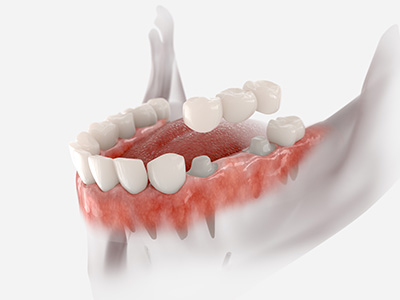
An implant-supported fixed bridge is a restorative solution that replaces several missing teeth in a row by anchoring a multi-tooth prosthesis to dental implants rather than relying on the neighboring natural teeth. Unlike a traditional bridge that requires shaving down adjacent teeth to support the restoration, implant-supported bridges are secured directly to implants placed in the jaw, which serves to recreate the function and appearance of natural teeth more faithfully.
This type of restoration is designed to behave like natural teeth when chewing and speaking. Because the bridge is fixed in place — not removable like an overdenture — patients typically find their bite becomes more secure and predictable. The prosthesis is fabricated to match occlusion and aesthetics, restoring a balanced bite while improving overall comfort during daily activities like eating and conversation.
From a clinical perspective, implant-supported bridges combine surgical and prosthetic phases. Careful planning using digital imaging and three-dimensional scans helps determine ideal implant positions, the number of implants required, and the optimal design for the bridge itself. When planned and executed well, this approach delivers a durable, stable result that restores both function and confidence.
The presence of dental implants helps maintain the health of the underlying jawbone. When a natural tooth is lost, the bone that once supported it no longer receives the stimulation from chewing forces, and over time that bone tends to resorb. Placing implants restores that functional load to the bone, which signals the body to preserve bone volume and density in the area of the missing teeth.
By preserving bone under the bridge, implant-supported restorations help maintain normal facial contours and prevent the gradual sunken appearance that sometimes follows long-term tooth loss. This structural support can make a noticeable difference in the overall profile and the fit of surrounding dental prosthetics, improving both appearance and the long-term health of adjacent tissues.
Maintaining bone also supports the longevity of the restoration. A stable bony foundation reduces the chance of changes in fit or function over time, which means fewer adjustments and a more predictable outcome. The result is a restoration that not only looks and feels natural initially, but is also less susceptible to the structural changes that complicate long-term maintenance.
Good candidates for an implant-supported fixed bridge are adults in generally good health who have sufficient jawbone to support implants and healthy gum tissue. Conditions such as uncontrolled systemic disease or active periodontal infection may require treatment or stabilization before implant placement. A comprehensive evaluation — including a clinical exam and CBCT imaging — helps determine whether additional procedures such as bone grafting are necessary to create an ideal foundation.
The treatment pathway usually begins with diagnostic planning, which includes digital scans and three-dimensional imaging to map anatomy and plan implant locations precisely. Implants are then placed surgically into the jawbone and allowed to integrate over a healing period. Once osseointegration is confirmed, abutments are attached and impressions are taken so the laboratory can craft a custom bridge that aligns with your bite and appearance goals.
The timeline for completing an implant-supported bridge varies with each case, influenced by factors such as the need for grafting, the number of implants, and individual healing. Throughout this process, the clinical team will monitor healing and guide you through temporary solutions when necessary so you can maintain function and aesthetics while your final restoration is being made.
One of the most important benefits of implant-supported fixed bridges is the preservation of adjacent teeth. Traditional bridgework often requires reduction of healthy neighboring teeth to form abutments, permanently altering sound dental structure. Implant-supported bridges avoid this compromise by using implants as support, thereby protecting remaining natural teeth and supporting long-term oral health.
Functionally, implant-supported bridges provide superior stability compared with removable dentures. Because the prosthesis is anchored in the bone, patients frequently experience improved chewing efficiency and greater confidence when speaking and smiling. This can expand dietary choices and reduce the worry about slippage or movement that some removable options can produce.
From a maintenance standpoint, implant-supported bridges are cleaned similarly to natural teeth and conventional bridges, with careful home care and routine professional checkups. While they require attention to hygiene to prevent peri-implant disease, when cared for properly they tend to offer a predictable, long-lasting solution that integrates seamlessly into a patient’s daily life.
After the final bridge is delivered, patients can expect an adjustment period as muscles and tissues adapt to the new prosthesis. Regular follow-up appointments are important during the first year to evaluate healing, occlusion (bite), and the fit of the prosthesis. Your dentist will provide guidance on brushing, flossing, and using interdental aids designed for implant restorations to keep the area healthy.
Long-term success depends on consistent oral hygiene and professional maintenance. Routine dental visits allow for early detection of issues, such as wear on the prosthesis or inflammation around implant sites, and they give your care team the opportunity to intervene before small problems become more significant. Smoking cessation and management of chronic health conditions also support favorable outcomes.
With sensible maintenance and regular professional monitoring, implant-supported fixed bridges can serve as a stable, reliable long-term solution for many patients. They restore oral function, help preserve facial structure, and contribute to a quality-of-life improvement that’s measurable in everyday activities — from eating your favorite foods to smiling with confidence.
At Studio Dental Center for Advanced Dentistry, we combine modern imaging and restorative expertise to design implant-supported solutions tailored to each patient. If you’d like to learn more about whether an implant-supported fixed bridge is the right option for you, please contact us for more information.


An implant-supported fixed bridge replaces several adjacent missing teeth by anchoring a multi-tooth prosthesis to dental implants placed in the jaw. Unlike traditional bridges, it does not rely on grinding down neighboring healthy teeth for support. The implants act as artificial roots, providing a stable foundation that restores chewing function and speech.
Because the bridge is fixed in place rather than removable, most patients experience a predictable bite and greater confidence when eating or speaking. Laboratory-fabricated materials are selected to match your bite, shade, and facial contours for a natural appearance. When planned with digital imaging and precise prosthetic design, implant-supported fixed bridges deliver durable, long-term results.
The key difference between an implant-supported bridge and a traditional dental bridge is how the restoration is supported. Traditional bridges use natural teeth as abutments and typically require reducing healthy tooth structure. Implant-supported bridges use implants placed in the bone, preserving adjacent teeth and restoring force to the jaw.
Compared with removable dentures, fixed implant bridges offer enhanced stability and chewing efficiency because they are anchored to bone. They also help maintain facial structure by transmitting functional load to the jaw and limiting bone resorption. Maintenance more closely resembles caring for teeth and conventional bridges, with focused attention to prevent peri-implant disease.
Good candidates for an implant-supported fixed bridge are adults who are in generally good health and have adequate jawbone volume to accept implants. A comprehensive evaluation, including a clinical exam and CBCT imaging, determines bone quality and anatomical considerations. Active periodontal infection, uncontrolled systemic disease, or heavy smoking may require treatment or stabilization before implants are placed.
When jawbone is insufficient, pre-implant procedures such as bone grafting or sinus augmentation can often create a suitable foundation. Age alone is not a contraindication; rather, overall health, oral hygiene, and realistic expectations guide candidacy. Your dental team will explain alternatives and prepare a customized plan based on diagnostic imaging and treatment goals.
Treatment begins with diagnostic planning that uses digital impressions and three-dimensional CBCT scans to map anatomy and plan implant positions precisely. Surgical placement of implants follows once a plan is finalized, and implants are allowed to integrate with bone over a healing period. During this phase you may receive temporary restorations to preserve function and aesthetics while the sites heal.
After osseointegration, abutments are attached and the laboratory fabricates a custom bridge to match your occlusion and appearance. The final prosthesis is tried in and adjusted to ensure a balanced bite and comfortable fit before permanent attachment. At Studio Dental Center for Advanced Dentistry we combine digital planning with restorative expertise to coordinate each phase and monitor healing closely.
Bone grafting is recommended when there is insufficient ridge height or volume to support implant placement safely and predictably. Grafting materials and techniques vary from simple ridge augmentation to block grafts or sinus lifts depending on the anatomy and the number of implants planned. When grafting is performed, a healing period is required for the graft to integrate before implants can be inserted.
While bone grafting adds steps to the overall plan, it frequently enables implant placement in areas that would otherwise be unsuitable. Your team will review imaging to explain the rationale, the type of grafting recommended, and expected healing timelines. Careful planning and execution of grafting are important to achieving a stable long-term foundation for the final bridge.
Daily hygiene for an implant-supported fixed bridge includes thorough brushing twice a day and cleaning between and beneath the prosthesis with interdental brushes or floss designed for implants. These interdental aids remove plaque and food debris in areas that a regular toothbrush cannot reach. Maintaining excellent plaque control reduces the risk of peri-implant mucositis and peri-implantitis.
Regular professional maintenance is equally important and allows clinicians to evaluate soft tissues, check occlusion, and perform deep cleanings when necessary. Your dentist or hygienist can demonstrate the most effective tools and techniques for your specific bridge design. Consistent home care combined with periodic professional visits supports the long-term success of the restoration.
As with any surgical procedure, implant placement carries risks such as infection, bleeding, and temporary numbness from nerve irritation. Long-term prosthetic complications can include screw loosening, porcelain fracture, or wear of the prosthetic surfaces. Peri-implantitis, an inflammatory condition around implants, is a significant risk if hygiene and monitoring lapse.
Risk is minimized through thorough planning, atraumatic surgical technique, and patient adherence to home care and follow-up schedules. Medical conditions that affect healing should be managed in coordination with your physician to reduce complication rates. Early recognition and treatment of soft tissue inflammation or mechanical issues help preserve implant health and the integrity of the bridge.
With consistent oral hygiene and routine professional care, implant-supported fixed bridges can last many years and often decades. Longevity depends on factors such as bone quality, the patient’s oral hygiene, bruxism, and systemic health issues that affect healing. Prosthetic materials and the quality of laboratory work also influence long-term performance.
Even with durable implants, some prosthetic components may require maintenance or replacement over time, such as worn occlusal surfaces or loose screws. Regular monitoring allows timely repairs that extend the life of the overall restoration and protect supporting tissues. A proactive maintenance plan is key to maximizing longevity and function.
Implant-supported fixed bridges differ from implant-retained dentures and All-on-4/All-on-6 approaches primarily in design and intended use. Implant-retained dentures are removable prostheses that snap onto implants, while fixed bridges are permanently attached and mimic natural teeth more closely. All-on-4 or All-on-6 refers to full-arch fixed solutions planned to restore an entire dental arch with a strategic number of implants.
Choice among these options depends on the extent of tooth loss, bone availability, aesthetic goals, and functional demands. Fixed bridges are often ideal when replacing a segment of missing teeth, whereas full-arch protocols address complete arch rehabilitation. Your clinician will help you weigh the advantages and maintenance differences of each option based on your clinical situation.
During a consultation at Studio Dental Center for Advanced Dentistry in Plantation, FL, you can expect a focused evaluation that includes a clinical exam, digital scans, and CBCT imaging as needed. The team will discuss your medical history, aesthetic goals, and functional concerns to create a treatment plan tailored to your needs. This visit also allows time to review potential preparatory procedures such as grafting and to set realistic timelines for treatment.
After diagnostic imaging, your dentist will outline implant placement options, the anticipated number of implants, and the provisional plan for temporary restorations during healing. You will receive clear instructions on pre-surgical preparation, post-operative care, and the hygiene practices that support long-term success. Follow-up appointments and a customized maintenance schedule are established to monitor healing and the performance of the final bridge.

Ready to book your next dental visit or have questions about your care?
At Studio Dental Center for Advanced Dentistry, our team is here to make getting started simple and stress-free. Whether you call, email, or submit our online form, we’re happy to help with scheduling, treatment questions, or anything you need along the way. We take the time to listen and guide you through your options so you feel confident and informed at every step. Take the first step toward a healthier, more confident smile, reach out today and experience personalized care made easy.