Missing teeth change more than the way your smile looks — they affect how you chew, speak, and how the jawbone maintains its shape over time. Many adults face tooth loss for a range of reasons: periodontal disease, trauma, long-term decay, or untreated wear. Modern implant dentistry offers a predictable approach to restoring oral function while preserving surrounding tissues and facial contours.

Dental implants are designed to replace the missing tooth root and provide a stable foundation for prosthetic teeth. Because the implant fuses with bone, it recreates the support that natural roots provide, which helps maintain chewing efficiency and keeps adjacent teeth from shifting into empty spaces. For many patients, this results in a restoration that feels and functions much like a natural tooth.
At Studio Dental Center for Advanced Dentistry, our approach to implant care emphasizes careful planning and clear communication. We evaluate each patient’s overall oral health, review imaging, and outline the sequence of care so you understand what to expect from consultation through final restoration.
A dental implant is a small, biocompatible post surgically placed into the jaw. Once it integrates with the bone through a process called osseointegration, it acts as an anchor for crowns, bridges, or overdentures. This connection mimics the stability offered by natural roots and supports restorations that restore proper bite mechanics and aesthetics.
Implants can be used in one tooth at a time or as part of a larger restorative plan. Their versatility makes them appropriate for single-tooth replacements, multiunit bridges supported by implants, and full-arch solutions when several teeth are missing. Because implants stimulate the jawbone, they help reduce the bone loss that commonly follows extraction.
Compared with removable dentures or conventional bridges, implants often offer superior comfort and stability. They eliminate many of the fit and retention problems associated with removable appliances and avoid the need to alter adjacent healthy teeth, which is often required for traditional bridgework. For daily activities like eating and speaking, implants can restore confidence and convenience.
Because an implant-supported restoration is anchored in bone, it resists movement and doesn’t rely on adhesives or clasps. Patients generally find they can enjoy a broader variety of foods and experience clearer speech than they would with loose-fitting dentures. In addition, implant restorations are maintained using regular oral hygiene routines similar to natural teeth.
Dental implants help preserve the jawbone by transmitting functional forces into the underlying structure — an important biological benefit that reduces the progressive bone loss that follows tooth removal. Maintaining bone volume supports the facial profile and contributes to a more natural long-term appearance.
Another practical advantage is that implants do not decay. The prosthetic components attached to implants, such as crowns and bridges, can wear over time and may need eventual replacement, but the supporting implant itself is designed for longevity when placed and cared for properly.
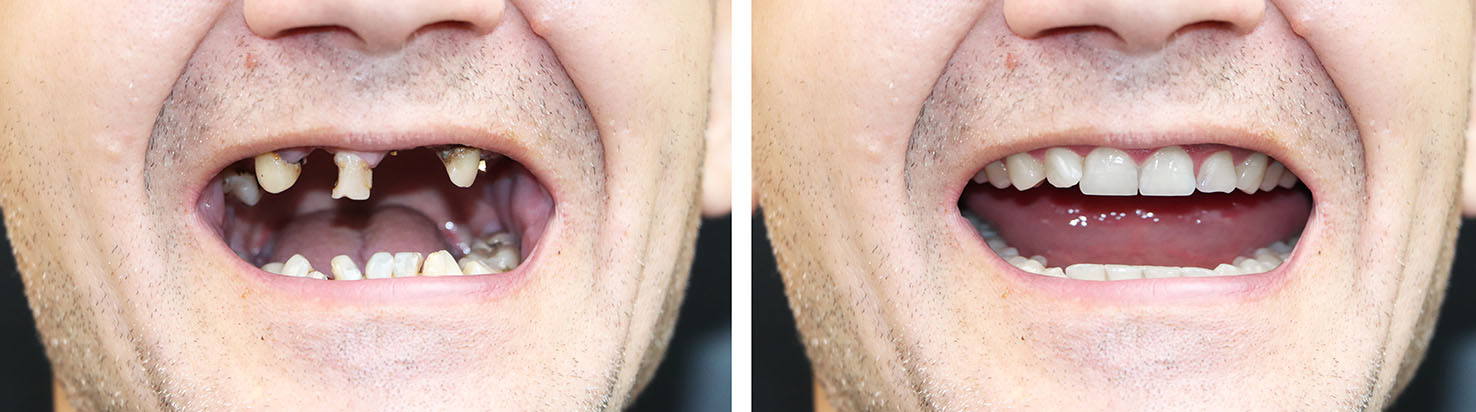
When one tooth is missing, a single implant topped with a custom crown provides a discreet, tooth‑preserving solution. Unlike a traditional three-unit bridge, a single implant restores the gap without requiring alteration of adjacent healthy teeth. The result is a self-supporting restoration that closely approximates the look, feel, and function of a natural tooth.
For two or more adjacent missing teeth, an implant-supported bridge can replace the missing teeth without relying on neighboring teeth for support. Strategically placed implants serve as abutments for a bridge of crowns, preserving surrounding teeth and delivering a stable, long-term outcome. This approach also helps maintain the underlying bone that would otherwise resorb over time.
When most or all teeth are missing in an arch, fixed full-arch restorations supported by four to six implants can recreate an entire row of teeth that remains in place and functions like a natural dentition. These protocols allow for immediate temporary teeth in many cases and a precisely fabricated permanent prosthesis once the implants have integrated with bone.
For patients who prefer a removable option, overdentures that clip onto a small number of implants significantly improve retention and stability compared with traditional dentures. These prostheses are easier to clean and provide better comfort and function, especially for lower‑jaw restorations where conventional dentures are often less stable.
Most generally healthy adults with adequate bone or the ability to receive bone grafting are candidates for implants. A thorough evaluation includes reviewing medical history, performing an oral exam, and obtaining three‑dimensional imaging when necessary. Factors such as oral hygiene, periodontal health, and long-term treatment goals are considered when designing a personalized plan.
During the consultation we’ll explain the available restorative options, the timeline for healing and prosthetic fabrication, and any preparatory procedures that may be needed. Clear communication about expectations and clinical steps helps patients make informed decisions about their care.
Implant treatment typically follows a staged process: initial evaluation and imaging, placement of implant posts, a healing period for osseointegration, and finally attachment of the restorative component. In appropriate cases, temporary restorations may be delivered immediately after placement, while permanent crowns or bridges are fabricated after the implant has fully integrated.
Because every case is different, some patients require additional procedures such as extractions or minor bone augmentation before implant placement. Our team discusses anesthesia and sedation options in advance and provides detailed pre- and post-operative instructions so patients feel prepared and comfortable throughout treatment.
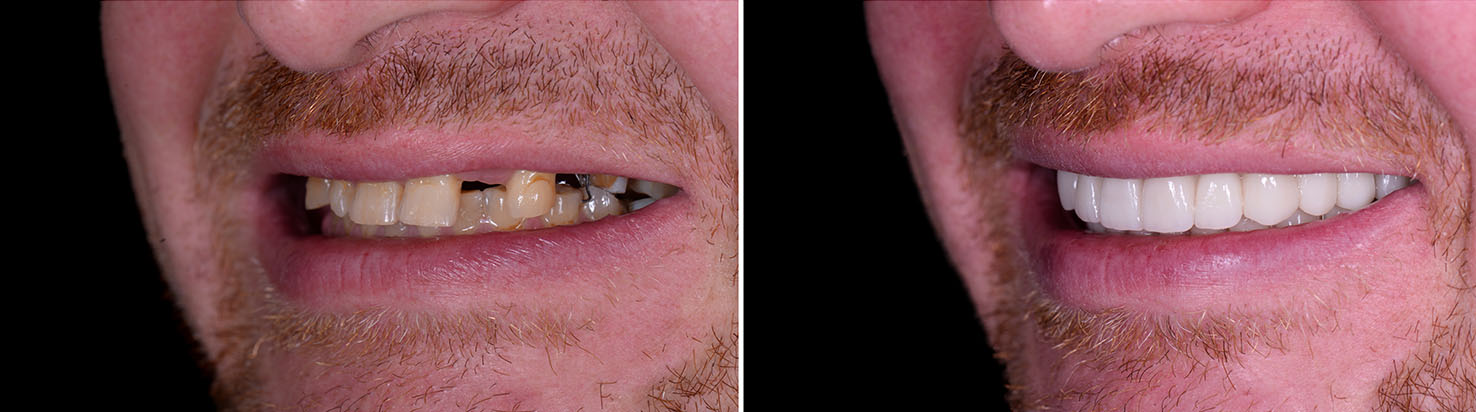
Sufficient bone volume is essential for predictable implant placement. When bone has been lost due to periodontal disease, trauma, or long-standing tooth loss, grafting procedures can rebuild the necessary foundation. Grafts may be placed at the time of extraction, as a preliminary step before implant placement, or simultaneously with the implant depending on the clinical situation.
Using modern grafting materials and techniques, clinicians can often restore adequate support with minimal additional morbidity. A well-planned graft helps ensure that implants receive the stability they need to integrate and support the final prosthesis.
After implant restoration, long-term success depends on regular professional evaluations and consistent at-home oral hygiene. Routine dental cleanings, periodic radiographs, and monitoring of gum health around implants help detect potential issues early. Because the soft tissue around an implant cannot heal in the same way as around a natural tooth if disease develops, prevention and early intervention are critical.
Patients who commit to thorough daily care and regular dental checkups typically enjoy reliable implant performance for many years. When minor adjustments are needed, our team works to preserve comfort and function while protecting the underlying implant structure.
Dental implants offer a modern, evidence‑based path to replacing missing teeth while supporting long‑term oral health. Whether you are considering a single replacement, a multiunit bridge, or a full-arch restoration, individualized planning and careful execution are the keys to success.
If you would like to learn more about implant options or explore whether this treatment is appropriate for your smile, please contact us for more information. Our team at Studio Dental Center for Advanced Dentistry is available to answer questions and guide you through the next steps toward a secure, natural-feeling restoration.


A dental implant is a small, biocompatible post that is surgically placed into the jaw to serve as an artificial tooth root. Over time the implant bonds with the surrounding bone through a process called osseointegration, creating a stable foundation for a prosthetic tooth. Once integrated, the implant supports crowns, bridges, or overdentures that restore chewing function and appearance.
Because the implant replaces the root portion of a tooth, it helps preserve jawbone volume and prevents neighboring teeth from drifting into the empty space. Implant restorations are designed to mimic the form and function of natural teeth, improving bite mechanics and esthetics. With proper planning and care, an implant-supported restoration can feel and perform much like a natural tooth.
Most generally healthy adults who have adequate jawbone or who can receive bone grafting are potential candidates for dental implants. A thorough evaluation includes review of medical history, assessment of periodontal health, and three-dimensional imaging when needed to determine bone quantity and quality. Factors such as tobacco use, systemic conditions, and oral hygiene habits are considered when planning treatment.
Candidates should be committed to maintaining good daily oral care and attending regular dental checkups to protect implant health. In many cases, conditions such as controlled diabetes or a history of periodontal disease can be managed so implant therapy remains a viable option. Final candidacy is determined through personalized assessment and discussion of treatment goals.
Implant treatment generally follows a series of planned steps beginning with a consultation, clinical exam, and diagnostic imaging to develop a customized treatment plan. Preparatory procedures such as tooth extraction or bone grafting may be performed if necessary before implant placement. The implant post is then placed in the jaw, and a healing period follows to allow osseointegration.
After the implant integrates with bone, a restorative phase begins in which an abutment and final crown, bridge, or denture are fabricated and attached. Some patients receive a temporary restoration at the time of placement to maintain function and esthetics during healing. Communication about timelines, clinical steps, and expected healing helps patients understand the process from consultation through final restoration at Studio Dental Center for Advanced Dentistry.
Implant restorations range from single-tooth crowns to multiunit implant-supported bridges and full-arch fixed prostheses supported by four to six implants. Single crowns replace an individual missing tooth without altering adjacent natural teeth, while implant-supported bridges replace several consecutive teeth using strategically placed implants as anchors. Full-arch solutions can recreate an entire dental arch with fixed or removable designs depending on patient needs.
For patients who prefer a removable option, implant-retained overdentures attach to a small number of implants to provide superior retention and stability compared with conventional dentures. Material choices and attachment systems are selected based on functional demands and esthetic goals. The restorative plan is tailored to each patient to balance comfort, hygiene access, and long-term performance.
Dental implants offer advantages over traditional removable dentures and conventional bridges by providing enhanced stability and by preserving underlying bone. Unlike bridges, implants do not require reduction of adjacent healthy teeth for support, which helps maintain overall tooth structure. Compared with removable dentures, implant-supported restorations typically improve chewing efficiency and reduce movement during speech and eating.
Because implants transmit functional forces to the jawbone, they help limit the progressive bone loss that often follows tooth removal and denture wear. Implant restorations are cared for with routine oral hygiene similar to natural teeth, and they can provide a more secure, long-term solution when clinical conditions are suitable. Treatment choice depends on the number of missing teeth, bone availability, and individual health considerations.
Bone grafting is recommended when there is insufficient jawbone volume to support predictable implant placement due to long-standing tooth loss, periodontal disease, or trauma. Grafting rebuilds the foundation by adding bone or bone-substitute material to the deficient area, and it can be performed at the time of extraction, prior to implant placement, or simultaneously with implant insertion depending on the clinical situation. The goal is to create a stable environment that encourages implant integration and long-term success.
Modern grafting materials and techniques allow many patients to achieve adequate support with minimal additional morbidity, and healing times vary based on the extent of grafting and the material used. Your clinician will explain the recommended approach, expected healing phases, and follow-up care to optimize outcomes. Successful grafting often expands the range of implant options available for restorative treatment.
Advanced imaging, such as cone beam computed tomography (CBCT), provides three-dimensional views of the jaw that are essential for accurate implant planning and safe placement. Intraoral scanning and digital impressions capture the soft-tissue and dental anatomy, which supports precise restorative planning and improved fit of final prosthetics. Together, these tools allow the clinical team to evaluate bone volume, vital structures, and optimal implant positions before surgery.
Digital planning software can be used to design surgical guides that transfer the planned implant positions to the surgical field, increasing predictability and efficiency. These guides help ensure ideal angulation, depth, and spacing to support the long-term function of the restoration. Clear preoperative planning also improves communication between the surgical and laboratory teams, producing more consistent esthetic and functional results.
Implant surgery is typically performed with local anesthesia and, when appropriate, supplemental sedation to promote comfort and relaxation. The procedure involves placing the implant into the prepared site, and care is taken to minimize trauma to surrounding tissues. Most patients experience only mild to moderate discomfort after surgery that can be managed with prescribed or over-the-counter medications and by following aftercare instructions.
Initial healing usually takes a few days to a couple of weeks for soft tissues, while osseointegration of the implant to bone occurs over several months depending on individual biology. Follow-up visits monitor healing, manage any temporary restorations, and confirm readiness for the restorative phase. Clear post-operative guidance on diet, oral hygiene, and activity helps reduce complications and supports predictable recovery.
Long-term implant health depends on consistent daily oral hygiene and routine professional care. Brushing twice daily with a soft-bristled brush, cleaning between implants and adjacent teeth with floss or interdental brushes, and attending regular dental cleanings and exams help prevent plaque accumulation and gum inflammation. Maintaining a consistent home-care routine reduces the risk of complications such as peri-implant mucositis and peri-implantitis.
Regular professional monitoring includes periodic radiographs and soft-tissue assessments to catch early changes before they progress. If signs such as increased mobility, pain, or persistent inflammation arise, contacting the dental team promptly allows for timely evaluation and treatment. With diligent care and scheduled maintenance, many patients enjoy reliable implant function for many years.
To explore implant options and determine whether implant therapy is appropriate for your needs, contact Studio Dental Center for Advanced Dentistry to schedule a consultation by calling (954) 669-1469 or by visiting the office at 12150 W Sunrise Blvd, Plantation, FL 33323. During the consultation the team will review your medical and dental history, perform an oral exam, and discuss imaging needs to develop a personalized treatment plan. This visit allows you to ask questions about the clinical steps, expected healing, and available restorative approaches.
Bringing a list of medications and any recent dental records can help streamline the assessment, and the office staff will explain what to expect at each appointment. Clear communication about goals and clinical findings supports informed decision-making and helps the clinician design an efficient, evidence-based plan. If additional preparatory procedures are needed, the team will outline those steps and coordinate care accordingly.

Ready to book your next dental visit or have questions about your care?
At Studio Dental Center for Advanced Dentistry, our team is here to make getting started simple and stress-free. Whether you call, email, or submit our online form, we’re happy to help with scheduling, treatment questions, or anything you need along the way. We take the time to listen and guide you through your options so you feel confident and informed at every step. Take the first step toward a healthier, more confident smile, reach out today and experience personalized care made easy.