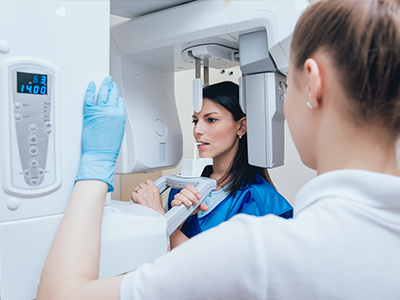
Digital radiography replaces traditional film with sensitive electronic sensors and computer processing to create high-resolution dental images. Rather than waiting to develop film, clinicians capture an X-ray and see the resulting image almost instantly on a monitor. This shift from analog to digital has transformed routine dental imaging into a faster, more flexible diagnostic tool that supports clearer communication between the care team and patients.
The move to digital imaging also brings practical advantages that affect everyday care. Images can be adjusted for brightness and contrast, magnified to examine a small area, and compared side-by-side with previous scans for tracking change over time. Because digital files are easily archived and retrieved, they become a convenient part of a patient’s longitudinal record, improving continuity of care across visits and providers.
Perhaps most importantly, digital radiography preserves clinical detail while minimizing inconvenience: exposures are typically lower than with film-based systems, image quality is enhanced through software processing, and results are available immediately, shortening appointment times and streamlining treatment planning.
Digital radiography relies on compact sensors placed inside or positioned near the mouth to capture X-ray photons and convert them into electronic signals. These sensors come in a variety of designs—small intraoral sensors for bitewing and periapical imaging, and larger plates for panoramic or extraoral views—and are engineered to provide consistent, clinically useful detail while fitting comfortably within the patient’s mouth.
When the sensor records an exposure, the data is transmitted to specialized software that reconstructs the image and presents it on a screen. That software often includes intuitive tools for adjusting contrast, zooming, measuring distances, and annotating images, which helps clinicians pinpoint issues such as early decay, root canal anatomy, or subtle bone changes that might be missed otherwise.
Because the image appears immediately and can be enhanced in real time, clinicians can confirm diagnostic quality before the patient leaves the chair. If an image needs to be retaken or repositioned, it can be corrected on the spot, reducing the need for repeat visits and improving diagnostic confidence.
Digital radiography supports more accurate diagnoses by delivering clearer, higher-contrast images than many older film systems. Enhanced visualization tools allow clinicians to examine margins, detect early decay between teeth, evaluate bone levels around implants, and assess the fine detail of root structures. This precision improves the reliability of treatment decisions across general dentistry, endodontics, periodontics, and implant planning.
Integration with practice software simplifies comparison between current and historical images, enabling clinicians to detect subtle changes over time. For more complex cases, digital files can be exported and shared with specialists or incorporated into advanced workflows—such as merging radiographic data with cone-beam CT scans or digital impressions—to create comprehensive, coordinated treatment plans.
Because the images are stored digitally, they can be annotated and included in patient records to document findings and explain recommended care. This transparency helps patients understand the rationale behind treatment options and supports clearer communication during consultations and follow-up visits.
Patients benefit from digital radiography through reduced radiation exposure and a more comfortable imaging experience. Digital sensors are often smaller and quicker to use than film, and modern equipment and exposure protocols are optimized to keep doses as low as reasonably achievable without sacrificing image quality. These safety measures are especially meaningful for repeat imaging and for patients who require frequent monitoring.
Immediate image availability makes visits more efficient: clinicians can review images with patients the same day, answer questions while the findings are fresh, and proceed with treatment planning without delay. This responsiveness shortens chair time and reduces the number of appointments needed to move from diagnosis to treatment.
Digital imaging is also environmentally friendlier than film-based methods because it eliminates the need for chemical processing and paper-based storage. Electronic storage reduces physical record-keeping and supports secure backup systems that protect patient information while ensuring images remain accessible when needed for future care.
Digital radiography is a foundational component of contemporary dental practices, working in concert with other digital tools such as CBCT scans, intraoral scanners, and practice management systems. When these technologies are integrated, clinicians gain a more complete view of oral health that supports precise diagnostics, simulation, and guided treatment approaches for restorative and surgical procedures.
Seamless file-sharing and compatibility with standard imaging formats make it straightforward to transmit images to referral partners, labs, or consultants while maintaining a secure record within the practice management system. This interoperability helps coordinate multidisciplinary care and streamlines steps like surgical planning, prosthetic design, and long-term follow-up.
From scheduling and intake to treatment and long-term monitoring, a digital imaging workflow reduces redundancies and provides clinicians with tools that support consistent, evidence-based decision-making. Patients benefit from clearer explanations, faster care, and a practice approach that emphasizes accuracy and safety.
At Studio Dental Center for Advanced Dentistry, we prioritize modern imaging because it improves diagnostic clarity, enhances patient comfort, and supports efficient, coordinated care. If you have questions about how digital radiography fits into your treatment or would like more information about what to expect during an imaging appointment, please contact us for more details and assistance.


Digital radiography uses electronic sensors and computer processing to create high-resolution dental images almost instantly. Unlike film, digital systems convert X-ray photons into electronic signals that are displayed on a monitor, eliminating chemical development and physical film handling. This immediate feedback allows clinicians to confirm image quality while the patient is still in the chair.
Digital files can be adjusted for brightness and contrast and magnified to examine fine details that might be harder to see on film. Images are easy to archive and compare with prior exams, which supports continuity of care across visits. Overall, the digital workflow speeds diagnosis and reduces the need for repeat exposures when positioning needs minor correction.
Digital radiography typically requires lower radiation doses than conventional film X-rays because sensors and software provide greater image sensitivity and processing capability. Practices follow the ALARA principle, which stands for as low as reasonably achievable, to minimize exposure through optimized settings and careful technique. Modern equipment and exposure protocols are selected to balance image quality with patient safety for routine and follow-up imaging.
For patients with specific concerns, clinicians use additional protective measures and tailor imaging frequency to clinical need. Pregnant patients and those with special medical considerations are assessed individually and imaged only when necessary, using protocols that further reduce dose. Staff training and adherence to regulatory guidelines ensure consistent, safe operation of digital radiography systems.
During a typical intraoral digital exam, a small sensor or plate is positioned inside or near the mouth while the clinician briefly activates the exposure. The process is fast and often more comfortable than older film systems because sensors are thinner and exposures are quicker. You may be asked to hold still for a few seconds while the image is captured to avoid motion blur.
Images appear on a monitor almost immediately so the clinician can review them with you and confirm diagnostic usefulness before you leave. If a retake is needed because of positioning, it is usually done on the spot, reducing the need for an additional appointment. This real-time review supports clearer communication about findings and next steps in care.
Digital radiography delivers high-contrast images that can be enhanced, magnified, and measured with specialized software to reveal subtle signs of decay, root anatomy, and bone changes. These tools help clinicians detect early problems that might be missed on less detailed images, improving diagnostic confidence across general dentistry and specialty care. Precise imaging is especially valuable for endodontic assessment, implant planning, and evaluating the margins of restorations.
Digital files integrate easily with practice management and advanced imaging systems, enabling side-by-side comparisons with prior studies and incorporation into comprehensive treatment workflows. Clinicians can export images to specialists or labs and annotate them to document findings and proposed interventions. The result is more coordinated planning and clearer explanations for patients about recommended care.
Digital images are stored electronically within the practice management or electronic health record system, where they can be backed up and archived for long-term access. Secure storage practices typically include encrypted transmission and routine backups to protect files from loss or unauthorized access. These measures make it straightforward to retrieve prior images for comparison during follow-up visits or when coordinating care with other providers.
When images need to be shared with referral partners or specialists, secure file-transfer protocols and consent procedures are used to maintain patient privacy. Standard imaging formats ensure interoperability while administrative controls track who accesses records. Adhering to applicable privacy regulations and internal policies helps preserve confidentiality while supporting continuity of care.
Yes, digital radiographs are often used alongside cone-beam CT scans and intraoral scans to create a comprehensive digital record for planning complex restorative or surgical procedures. Combining 2D radiographs with 3D CBCT data and digital impressions allows clinicians to visualize anatomy from multiple perspectives and simulate treatment outcomes. This multisource approach supports more accurate surgical guides, implant placement, and prosthetic designs.
Integrated digital workflows also simplify communication with labs and specialists by providing standardized data that can be shared electronically. Software tools can fuse radiographic images with intraoral scans to align prosthetic planning with underlying bone and root anatomy. The result is a more coordinated, predictable treatment process that reduces guesswork and improves clinical precision.
Manufacturers design many digital sensors to be smaller and more ergonomically shaped than older film plates, which can improve comfort for children and adults. Clinicians use gentle positioning techniques and distraction or reassurance to help younger patients or those with a strong gag reflex tolerate intraoral sensors. When intraoral placement is not feasible, extraoral imaging options can provide useful diagnostic information with minimal discomfort.
Staff members are trained to adapt their approach to each patient, using bite blocks, alternate angulations, or stepwise introduction of the sensor to reduce anxiety and gagging. Imaging choices are guided by clinical need so that the least invasive option that yields diagnostic value is selected. Clear communication before and during the procedure helps patients feel more at ease and improves the likelihood of obtaining diagnostic-quality images on the first attempt.
Digital radiographs offer high accuracy due to sensitive sensors and image-enhancement software, which together improve visualization of small details. Despite these advantages, factors such as patient movement, incorrect sensor angle, or improper exposure can degrade quality and obscure diagnostic information. Clinicians review images immediately and compare them with clinical findings to determine whether the image meets diagnostic standards.
If an image does not clearly show the area of interest, a retake is performed promptly so the clinician can proceed with an accurate diagnosis and treatment plan. Because exposures are typically lower with digital systems and retakes are limited to what is clinically necessary, the overall radiation burden is managed carefully. The ability to confirm quality in real time reduces the need for repeat visits solely for imaging purposes.
Digital radiography is used routinely for checkup exams to detect interproximal decay, assess crestal bone levels, and evaluate the condition of fillings and crowns. It is also essential in endodontics for visualizing root canal anatomy and confirming working lengths, and in implant evaluation to assess available bone and proximity to critical structures. Trauma assessment and monitoring healing after treatment are other frequent applications where timely imaging improves clinical decisions.
Because images can be annotated and compared with prior studies, digital radiography supports long-term monitoring of progressive conditions such as periodontal disease or recurrent decay. The modality is flexible enough to inform both preventive care and complex restorative or surgical planning. Its role across multiple disciplines makes it a foundational diagnostic tool in modern dental practice.
Studio Dental Center for Advanced Dentistry integrates digital radiography into a broader digital workflow to enhance diagnostic clarity and patient communication. Immediate imaging allows clinicians to review findings with patients in real time, illustrate concerns with magnified views, and document conditions for long-term tracking. This approach supports informed decision making and helps patients understand recommended care.
The practice combines safe exposure protocols with modern sensors and image-management systems to prioritize comfort and continuity of care. Digital images are stored securely and used alongside other technologies like CBCT and digital impressions when comprehensive planning is required. Patients benefit from faster appointments, clearer explanations, and coordinated care that leverages precise imaging data.

Ready to book your next dental visit or have questions about your care?
At Studio Dental Center for Advanced Dentistry, our team is here to make getting started simple and stress-free. Whether you call, email, or submit our online form, we’re happy to help with scheduling, treatment questions, or anything you need along the way. We take the time to listen and guide you through your options so you feel confident and informed at every step. Take the first step toward a healthier, more confident smile, reach out today and experience personalized care made easy.