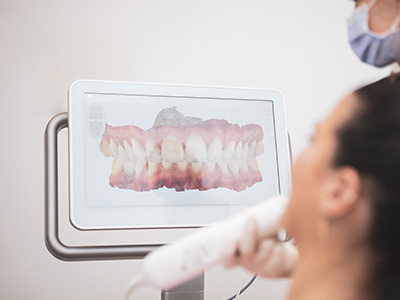
Many patients recall dental impressions as an uncomfortable process involving bulky trays and thick impression material. The DEXIS IO scanner replaces that experience with a small, handheld wand that captures detailed intraoral images without the gagging, mess, or lengthy setting times associated with conventional impressions. For patients who feel anxious about dental procedures, the digital approach removes a common source of discomfort and helps make appointments more pleasant overall.
The scanning process is straightforward: the clinician moves the wand gently around the teeth and soft tissues while the device builds a real-time, three-dimensional model on a monitor. Because scans are captured continuously, the team can immediately verify that the necessary anatomy has been recorded, reducing the need for repeat visits. Patients often appreciate being able to watch their own digital impressions take shape and to see exactly what the clinician sees.
Beyond comfort, the noninvasive nature of the DEXIS IO scanner supports better patient cooperation and shorter chair time. This smoother experience can make routine restorative and orthodontic workflows less disruptive to daily life, especially for those with strong gag reflexes, small mouths, or heightened dental sensitivity.
Accuracy is a central advantage of intraoral scanning. The DEXIS IO scanner captures fine surface detail and spatial relationships with a level of consistency that helps clinicians design restorations, aligners, and appliances that fit more predictably. Precise digital models reduce the variables that can lead to poor margins or ill-fitting restorations, supporting better long-term results for crowns, bridges, and implant restorations.
The high-resolution digital data integrates directly with CAD/CAM workflows, allowing laboratory partners and in-office systems to work from the same precise dataset. That streamlined transfer cuts down on manual interpretation and the incremental errors that can occur when impressions are physically poured and shipped. For clinicians focused on delivering durable, comfortable restorations, the fidelity of digital scans is a meaningful clinical asset.
Because the scan preserves detailed anatomy, clinicians can use the images for careful treatment planning and verification before fabrication. This reduces surprises during try-ins and allows small adjustments to be planned digitally, helping the final restoration to match both functional requirements and patient expectations.
In addition, digital scans serve as an accurate baseline record of a patient’s dentition. Having a reliable digital archive supports monitoring changes over time and provides a reference for future restorative or orthodontic work, enhancing continuity of care.
One of the practical benefits of the DEXIS IO scanner is the reduction in turnaround times within common dental workflows. Because scans are available instantly, clinicians can begin reviewing and planning during the same appointment rather than waiting for poured models or lab shipments. This immediacy reduces unnecessary delays in decision-making and keeps treatment moving forward more efficiently.
For straightforward restorations and aligner cases, digital files can be transmitted electronically to trusted dental laboratories or used directly with in-house milling and 3D printing systems. That connectivity shortens the production cycle for prosthetics and appliances, often translating to fewer appointments and faster delivery of definitive care for patients.
From a practice perspective, streamlined workflows also improve scheduling flexibility and resource use. By cutting down on repeat impressions and minimizing remakes, the team can allocate time and materials more effectively, improving overall practice productivity while maintaining high standards of care.
Digital scans provide a visual language that helps patients understand their current oral condition and the rationale for recommended treatments. Displaying a three-dimensional model during consultation allows clinicians to point out specific concerns—such as wear patterns, margin integrity, or alignment issues—so patients can make informed decisions with clearer expectations.
For laboratory collaboration, the precision of the DEXIS IO scan removes ambiguity that sometimes accompanies physical impressions. Dental technicians receive detailed, standardized files that reduce interpretation errors and streamline the design process. When both clinician and technician are working from the same high-quality dataset, the result is a more coordinated approach to restorative design and fewer iterative adjustments.
Effective communication also extends to treatment documentation. Digital records are easy to store, share, and compare, supporting coordinated care when multiple providers are involved. Whether planning an implant restoration or coordinating orthodontic movement, the shared digital record helps keep everyone aligned on goals and timelines.
Incorporating intraoral scanning is part of a broader shift toward minimally invasive, technologically driven dentistry. The DEXIS IO scanner complements other digital tools commonly used in advanced practices—such as CBCT imaging and digital radiography—by supplying precise surface detail that enhances treatment planning and outcome predictability. Together, these technologies support a more conservative and evidence-based approach to care.
Patients benefit from this integration through clearer explanations, more predictable procedures, and reduced need for repeat visits. Clinically, the practice gains the ability to design and deliver solutions with greater control over fit, function, and aesthetics. This alignment of patient experience and clinical capability is a strong foundation for consistent, high-quality dental care.
At Studio Dental Center for Advanced Dentistry, we integrate digital scanning into a patient-centered workflow that emphasizes comfort, communication, and long-term health. Our goal is to use reliable technology in ways that directly improve treatment outcomes and the overall patient experience.
As digital dentistry continues to evolve, intraoral scanning remains a practical, proven tool that brings measurable benefits to everyday restorative and orthodontic care. Its role will likely expand as materials and fabrication methods advance, further improving the predictability and convenience of modern dental treatment.
In summary, the DEXIS IO scanner offers a comfortable, precise, and efficient alternative to traditional impressions, benefiting patients and clinicians alike. If you’d like to learn more about how digital scanning could support your care, please contact us for more information.


The DEXIS IO scanner is a handheld intraoral scanning device that captures high-resolution, three-dimensional images of the teeth and soft tissues. It produces continuous digital impressions that clinicians can view in real time, eliminating the need for traditional tray-and-putty impressions. These digital files can be used for restorative planning, aligner design, and appliance fabrication.
Because the scanner records precise surface detail and spatial relationships, it supports predictable design and fabrication of crowns, bridges, and prosthetics. The result is a consistent digital baseline that can be archived and compared over time to monitor changes in a patient’s dentition.
The scanning process replaces bulky trays and viscous impression materials with a slim wand that is moved gently around the mouth, which reduces gagging and discomfort. Scans are captured quickly and continuously, so appointments are less stressful for patients with small mouths or heightened sensitivity. Many patients find the ability to watch the scan on a monitor reassuring and informative.
Because clinicians can verify anatomy immediately, repeat impressions are less common and chair time is often shorter. The noninvasive nature of the scan also helps patients who feel anxious about dental procedures to cooperate more easily during restorative or orthodontic workflows.
DEXIS IO delivers high-resolution surface detail that captures margins, contacts, and occlusal anatomy with a level of consistency suitable for many restorative and implant cases. The device minimizes the incremental errors associated with pouring and shipping physical models, which helps reduce fit issues for crowns, bridges, and implant restorations. When combined with careful clinical technique, digital scans support predictable laboratory and in-office fabrication.
The preserved anatomical record also allows clinicians to perform digital verification and plan small adjustments before fabrication, reducing surprises at try-in. While case complexity and clinical conditions can influence outcomes, the fidelity of digital scans is a meaningful advantage for long-term restorative success.
Digital files from the DEXIS IO scanner export in standardized formats that integrate directly with CAD/CAM systems and trusted dental laboratories. This direct transfer eliminates manual interpretation steps and reduces the risk of communication errors between the clinic and the lab. Laboratories receive a precise dataset, which speeds design and reduces the need for iterative adjustments.
In practices with in-house milling or 3D printing, scanned files can be used to produce restorations and appliances more rapidly, shortening production cycles. The streamlined digital workflow often translates into fewer appointments and more efficient coordination across the treatment team.
During a scan the clinician will move the lightweight wand around the teeth and surrounding soft tissues while a three-dimensional model builds on a monitor. The process is typically quiet and noninvasive, and clinicians pause to verify that all necessary anatomy has been captured. Patients can often remain seated in a relaxed position and may be shown the scan in real time to better understand their oral condition.
The total time for a single-arch scan is usually shorter than a traditional impression appointment, and scans can be reviewed immediately for completeness. If an area needs rescanning, the clinician can target that region quickly instead of repeating an entire tray impression.
Yes. The DEXIS IO scanner complements volumetric imaging such as CBCT by providing detailed surface anatomy that enhances surgical and restorative planning. When combined, these datasets allow clinicians to align soft-tissue and tooth-surface detail with three-dimensional bone information for more comprehensive treatment planning. This multimodal approach improves visualization for implant placement, complex restorative sequencing, and interdisciplinary cases.
At Studio Dental Center for Advanced Dentistry, digital scanning is used in concert with CBCT imaging and digital radiography to create coordinated treatment plans that prioritize precision and long-term function. Integrating multiple digital records supports conservative, evidence-based decision-making across a wide range of procedures.
Because scans are available immediately, clinicians can begin review and planning during the same visit instead of waiting for poured models or laboratory shipments. Electronic transmission of digital files to labs or in-house manufacturing systems shortens production cycles for prosthetics and appliances. This efficiency frequently reduces the number of follow-up appointments required to deliver definitive restorations.
From a practice-management perspective, fewer remakes and targeted rescans improve scheduling flexibility and resource allocation. Patients benefit from a smoother workflow that minimizes disruptions to daily life while maintaining clinical quality.
Digital scans are saved as electronic records that can be securely stored within the practice’s clinical software or transmitted to trusted partners using encrypted channels. Proper record management includes secure backups, access controls, and adherence to applicable privacy regulations to protect patient information. Clinicians retain the ability to compare archived scans over time for monitoring and documentation purposes.
When files are shared with laboratories or specialists, secure transfer protocols and agreements help ensure that data is handled responsibly. Patients who have concerns about privacy can discuss record storage and sharing practices with their clinician for clarification.
Yes. While intraoral scanning covers a wide range of restorative and orthodontic needs, certain clinical scenarios may still benefit from conventional impressions or supplemental techniques. Examples include cases with extreme subgingival margins, heavy bleeding, or anatomical challenges that prevent a complete optical capture in a single scan. In those situations, clinicians may combine digital scans with selective analog methods to achieve the required detail.
Ultimately, the decision between digital and traditional impressions depends on clinical judgment, case complexity, and the desired outcome. The DEXIS IO scanner expands the range of cases that can be handled digitally, but it does not completely eliminate the need for alternative approaches in every instance.
If you have questions about intraoral scanning or want to understand how it might apply to your care, contact Studio Dental Center for Advanced Dentistry to speak with the clinical team. The office can explain how the DEXIS IO scanner is used in specific workflows and help determine whether digital scanning is appropriate for your restorative or orthodontic needs.
During a consultation the clinician can review your oral health goals, demonstrate scanning technology when appropriate, and outline the next steps for diagnosis and treatment planning. Patients are encouraged to ask about record-keeping practices and how digital scans will be used to support long-term care.
Ready to book your next dental visit or have questions about your care?
At Studio Dental Center for Advanced Dentistry, our team is here to make getting started simple and stress-free. Whether you call, email, or submit our online form, we’re happy to help with scheduling, treatment questions, or anything you need along the way. We take the time to listen and guide you through your options so you feel confident and informed at every step. Take the first step toward a healthier, more confident smile, reach out today and experience personalized care made easy.