Modern materials and improved techniques have made replacing missing teeth more natural-looking and comfortable than ever. While dental implants and fixed bridgework are excellent solutions in many cases, removable dentures remain a proven, practical option for restoring a complete smile and reliable oral function.
At Studio Dental Center for Advanced Dentistry, we design dentures with an emphasis on precision, strength, and a natural appearance. Every prosthesis is crafted to support facial contours, restore chewing and speech, and help patients feel confident about their smiles again.
Our goal is to provide individualized treatment that fits each patient’s oral health needs and daily life. Whether you are exploring dentures for the first time or considering an upgrade to your current prosthesis, the information below explains the options, process, and what to expect so you can make an informed decision.
Losing one or more teeth affects more than just your smile. Gaps change how forces are distributed when you bite and chew, which can lead to uneven wear, shifting of neighboring teeth, and altered jaw function. Over time these changes may increase the risk of additional tooth loss and make daily activities like eating and speaking more difficult.
Tooth loss can also influence facial support. Without teeth to maintain normal jawbone stimulation, the bone can gradually resorb, and facial tissues may appear to collapse inward. This process changes facial proportions and can make a person look older than they feel. Restoring teeth with an appropriate prosthesis helps preserve facial contours and supports a healthier appearance.
Beyond function and aesthetics, there are social and emotional impacts to consider. Missing teeth may reduce confidence or cause people to avoid certain foods and social situations. Replacing missing teeth in a manner that suits your lifestyle can restore comfort and improve overall well-being.

Dentures are removable dental prostheses made up of artificial teeth attached to a base that fits over the gums. The base can be crafted to match the color of your gums so the appliance blends with your mouth. Dentures replace either a few missing teeth (partial dentures) or an entire arch (complete dentures).
Because they are removable, dentures can be taken out for cleaning and for giving your gums a rest overnight. That removability is an advantage for hygiene and maintenance, allowing thorough cleaning of both the prosthesis and the supporting tissues. Modern denture materials are more resilient and natural-looking than ever, improving comfort and aesthetics.
Dentures can be designed to work with remaining natural teeth and, if desired, to attach to implants for added stability. The right design depends on the number of missing teeth, the condition of the jawbone and gums, and your daily needs—whether you prioritize simplicity, maximum retention, or the closest feel to natural teeth.
Selecting the appropriate denture starts with a thorough clinical evaluation. This includes reviewing your medical and dental history, examining the health of any remaining teeth, assessing gum and bone conditions, and taking diagnostic images when needed. Your lifestyle, speech and chewing habits, and aesthetic goals are also important factors in determining the best solution.
Partial and complete dentures serve different purposes. Partial dentures restore one or several missing teeth while preserving and supporting the remaining dentition. Complete dentures replace a whole arch when there are no viable teeth left. In many cases, hybrid approaches—such as implant-retained overdentures—offer improved function and comfort.
Your clinician will discuss the pros and cons of each option and outline the clinical steps required for a successful outcome. Sometimes preliminary treatments—like extractions or minor soft tissue shaping—are recommended to create an ideal foundation for a long-lasting, well-fitting denture.
Full dentures replace all teeth in the upper arch, lower arch, or both. They provide an economical and effective way to restore appearance and basic chewing function when natural teeth are no longer present or cannot be preserved.
A conventional full denture is made after any necessary extractions and once the gums have healed. This timing helps produce a precise fit because it accounts for the healed contours of the mouth. For some patients, an immediate denture is provided at the time of extraction to avoid a period without teeth, with a later transition to a conventional denture after healing.
Immediate denture
An immediate denture is placed the same day teeth are removed so you leave the appointment with a complete smile. Because tissues change during healing, follow-up adjustments or a permanent replacement may be needed to maintain a comfortable fit.
Overdenture
An overdenture is supported in part by remaining natural tooth roots or specially placed attachments. Preserving roots under an overdenture can help maintain bone volume and improve prosthesis stability.
Implant-supported denture
When implants are used as anchor points, dentures gain superior retention and reduced movement during function. Implant support can transform a traditional denture into a more confident and comfortable solution.
Partial dentures fill gaps left by one or several missing teeth and use clasps or precision attachments to connect to the remaining natural teeth. A well-designed partial denture stabilizes adjacent teeth, helps maintain proper tooth alignment, and restores chewing efficiency for many daily foods.
Modern partials can be fabricated from a variety of materials—metal frameworks for strength, flexible resins for comfort, or hybrid options that combine benefits. The chosen material and attachment style are selected to balance fit, hygiene, and aesthetics for each patient’s unique situation.
Our clinical team evaluates the condition of remaining teeth and supports to determine whether a partial denture, a complete denture, or an implant-based alternative will best meet your goals.
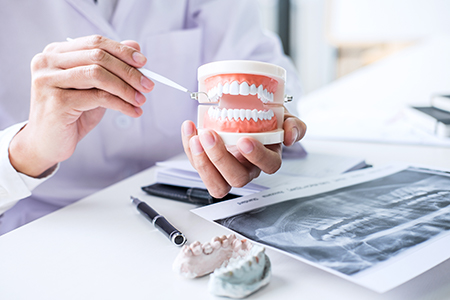
Creating a comfortable denture blends clinical science and careful craftsmanship. The process typically begins with detailed impressions to capture the shape of your gums and any remaining teeth. Accurate records of how your jaws align (bite registration) are taken so the dental technician can position the teeth for optimal function and appearance.
Material selection, tooth shape and shade, and the way the denture contacts the lips and cheeks all affect comfort and a natural look. Try-in appointments allow you and your clinician to review tooth position and aesthetics before the final prosthesis is processed, minimizing surprises and ensuring a personalized result.
Advances in denture materials and digital tools have improved fit, strength, and aesthetic realism. When implants are part of the plan, surgical placement and precise attachment components are coordinated to produce a prosthesis that feels stable and predictable in everyday use.

It’s normal to need a short adjustment period when you first receive a denture. Speaking and chewing may feel different initially; most patients adapt within days to a few weeks. Your clinician will schedule follow-up visits to refine the fit and relieve any sore spots so the prosthesis becomes comfortable during daily activities.
Good denture care prolongs both the appliance and oral health. Rinse and brush dentures daily with products designed for prostheses, clean any remaining natural teeth and gums thoroughly, and remove dentures at night to allow tissues to rest. Regular dental checkups are important to monitor oral tissues, evaluate fit, and address any changes.
Over time, the contours of the jaw and gums can change, which may make a denture feel loose or less stable. Relines, adjustments, or in some cases a remake, help restore proper fit. For patients who desire added retention, implant-supported options are available to anchor dentures and reduce movement during function.
Follow-up care also includes routine oral examinations to check for tissue health and to ensure early detection of any issues. With attentive maintenance and timely adjustments, dentures can provide comfortable, reliable function for many years.
In summary, dentures are a versatile and effective way to restore missing teeth and renew oral function. If you would like to learn more about denture options, materials, or the process of getting a well-fitting prosthesis, please contact us for more information.


Dentures are removable dental prostheses that replace missing teeth and the supporting gum tissue, restoring the appearance and basic function of a natural smile. They consist of artificial teeth set in a base that is shaped to fit the contours of the mouth and can be color-matched to the gums for a natural look. Dentures may replace a few missing teeth (partial denture) or an entire dental arch (complete denture). Modern materials and fabrication techniques make them more comfortable and lifelike than in the past.
Dentures restore chewing ability and help with clear speech by reestablishing proper tooth arrangement and bite contacts. They also provide facial support that can prevent the sunken appearance that follows tooth loss and help maintain more youthful facial proportions. For many patients, implants can be integrated with dentures to increase retention and stability when desired. Your clinician will explain how different designs affect fit, maintenance, and daily function.
Good candidates for dentures include people who have lost several teeth or whose remaining teeth cannot be predictably preserved with restorative treatment. Age alone is not a disqualifying factor; the decision is driven by oral health, general health, and personal goals. A complete evaluation of gum health, jawbone support, and existing tooth condition helps determine whether a partial, complete, or implant-assisted denture is most appropriate. The clinician will also review any medical conditions or medications that may affect healing and oral care.
Patients must be able to maintain daily hygiene routines and attend regular dental checkups to monitor tissue health and denture fit. In some cases, preliminary treatments such as extractions, periodontal therapy, or minor soft-tissue contouring are recommended to create a stable foundation. For those seeking greater retention, the team may discuss implant-retained options as an alternative or complement to conventional dentures. A personalized treatment plan balances function, esthetics, and long-term oral health goals.
Dentures come in several forms to address different needs, including conventional full dentures, immediate dentures provided at the time of extraction, overdentures that are supported in part by remaining roots, and implant-supported prostheses that attach to dental implants. Conventional full dentures are made after healing from extractions to capture the final contours of the mouth, while immediate dentures offer an interim solution so patients do not go without teeth. Overdentures preserve roots or use attachments to enhance stability and preserve bone volume. Implant-supported dentures use strategically placed implants to improve retention and reduce movement during function.
Removable partial dentures fill gaps left by one or several missing teeth and use clasps or precision attachments to connect to remaining teeth, helping to maintain tooth position and chewing efficiency. Materials range from durable metal frameworks to flexible resins and acrylic bases, chosen for strength, comfort, and hygiene. The selection of a design considers the number and location of missing teeth, the condition of the supporting teeth and gums, and the patient’s esthetic preferences. Your dental team will explain which option best aligns with your oral condition and daily needs.
Creating a well-fitting denture begins with careful clinical records: detailed impressions, bite registrations, and aesthetic records that guide tooth selection, position, and shade. Try-in appointments allow the patient and clinician to evaluate tooth arrangement and facial support before the final prosthesis is processed, reducing surprises and improving satisfaction. Advanced digital scanning and CAD/CAM technology can complement traditional techniques to improve accuracy and communication with the dental laboratory. Throughout the process, attention to soft-tissue contours and occlusion is essential for long-term comfort and function.
At Studio Dental Center for Advanced Dentistry, we coordinate with skilled dental technicians to refine material choices and finishing details that affect strength and esthetics. When implants are part of the plan, surgical placement and prosthetic components are carefully planned so the final denture seats securely and restores predictable function. After processing, initial fitting appointments focus on relieving pressure points and verifying speech and bite, with adjustments made as needed. Ongoing follow-up ensures the prosthesis continues to perform as tissues change over time.
Daily cleaning preserves the appearance and longevity of dentures and supports oral health. Remove and rinse dentures after eating to dislodge food particles, then brush them gently with a soft brush and a nonabrasive denture cleaner to remove biofilm and stains. Avoid hot water that can warp acrylic bases and do not use regular toothpaste, which can be abrasive to denture surfaces. Soaking overnight in a recommended cleaner helps keep the appliance hydrated and sanitary.
It is equally important to clean and inspect any remaining natural teeth, gums, and oral tissues to prevent decay and gum disease. Remove dentures at night to give tissues a chance to recover and to reduce the risk of irritation or infection. Bring your dentures to dental appointments so the clinician can evaluate fit, perform professional cleaning when needed, and recommend relines or repairs. Proper care and regular checkups help prevent complications and extend the functional life of the prosthesis.
Expect an adaptation period when you first receive dentures, during which speaking and chewing may feel unfamiliar and some minor irritation can occur. Most patients adjust within days to a few weeks as muscles and tissues learn to accommodate the new appliance, but individual experiences vary. Sore spots or pressure areas are common early on and should be addressed promptly by your clinician to prevent ulcers. Regular follow-up visits during this period are important to refine fit and ensure comfort.
Adjustments can include minor grinding, relining the denture base, or making small alterations to tooth position to improve occlusion and function. If a denture is immediately placed after extractions, a later transition to a conventional prosthesis or a reline may be recommended once healing is complete. Persistent pain, difficulty swallowing, or marked changes in fit should be reported so the team can evaluate underlying causes. With timely adjustments and patient education, most people achieve comfortable function and clear speech.
The useful life of a denture depends on material durability, oral changes, and how well the appliance is cared for, but many prostheses remain serviceable for several years with proper maintenance. Natural bone resorption and gum remodeling can alter the fit over time, making dentures feel loose or unstable even when the acrylic itself shows minimal wear. Regular clinical evaluations detect these changes early so relines or adjustments can restore an accurate fit and comfortable function. Wear to the artificial teeth can also affect chewing efficiency and may prompt replacement or refurbishment.
Relines add material to the tissue side of a denture to improve contact with the gums and are a common, conservative way to extend fit and comfort. In some cases, a remake may be recommended when changes are advanced or when a patient seeks improvements in esthetics or occlusion. Implant-supported dentures often provide greater long-term stability and may reduce the frequency of relining, but they also require periodic maintenance of attachment components. Your dentist will advise on the best maintenance schedule based on oral changes and functional needs.
Implant-supported dentures use dental implants as anchors, which significantly increase retention and reduce lateral movement compared with conventional tissue-supported prostheses. This added stability improves chewing efficiency, speech, and patient confidence, especially for lower dentures that are more prone to displacement. Implant attachments can be designed to allow removal for hygiene or to support fixed prostheses that are not removed by the patient. The choice between implant-retained and conventional dentures depends on bone availability, medical factors, and patient goals.
Placing implants involves a surgical phase and a healing period during which implants integrate with the jawbone, followed by the attachment and fine-tuning of the prosthesis. Maintenance for implant-supported dentures includes cleaning around abutments and periodic checks of attachment components, which may require replacement over time to preserve retention. Because implants help preserve bone by transmitting functional loads to the jaw, they can slow the resorption process that destabilizes conventional dentures. Your clinician will explain surgical considerations, healing expectations, and aftercare for implant-retained solutions.
Dentures often change how the tongue, lips, and cheeks interact with teeth, which can temporarily affect speech patterns such as pronouncing certain consonants. Practicing reading aloud, speaking slowly, and performing simple exercises can accelerate adaptation and improve clarity. Saliva production may increase initially, and this typically settles as the mouth acclimates to the prosthesis. If speech challenges persist beyond the expected adaptation period, your dental team can evaluate fit and make targeted adjustments.
Dietary adjustments are common during the early weeks; begin with soft, easy-to-chew foods and cut items into smaller pieces to build confidence. Avoid very hard, sticky, or overly chewy foods until you are comfortable and the denture fit is stabilized through follow-up visits. Over time most people regain much of their previous chewing ability, and implant-supported options can further expand dietary choices by providing greater stability. Attention to bite balance and regular maintenance helps ensure efficient function for everyday eating.
Replacing missing teeth with a properly designed denture restores support for the lips and cheeks, which helps preserve facial contours and prevents the sunken appearance that can follow tooth loss. By reestablishing vertical dimension and tooth relationships, dentures contribute to more balanced facial proportions and a natural smile. Restoring chewing function also supports proper nutrition and overall well-being, which are important aspects of long-term health. Thoughtful prosthetic design considers both esthetics and function to achieve a harmonious result.
Your care team at Studio Dental Center for Advanced Dentistry monitors oral tissues and jawbone changes so adjustments or relines can be made before fit and function decline. Regular examinations allow early detection of sore spots, tissue irritation, or mucosal changes, and they support preventive measures to maintain oral health. When appropriate, the team will discuss options such as overdentures or implant-retained solutions to preserve bone and improve stability. Consistent follow-up and hygiene habits are key to maximizing the benefits of any denture prosthesis.

Ready to book your next dental visit or have questions about your care?
At Studio Dental Center for Advanced Dentistry, our team is here to make getting started simple and stress-free. Whether you call, email, or submit our online form, we’re happy to help with scheduling, treatment questions, or anything you need along the way. We take the time to listen and guide you through your options so you feel confident and informed at every step. Take the first step toward a healthier, more confident smile, reach out today and experience personalized care made easy.